Creating a logo is more than just drawing a beautiful symbol; it is a science that influences the user's subconscious through visual stimuli. At Nova Soft, we are convinced that a strategically designed logo accounts for 50% of a business's success.
Understanding the Psychological Impact of Logo Design
Color Psychology: The Language of Emotions
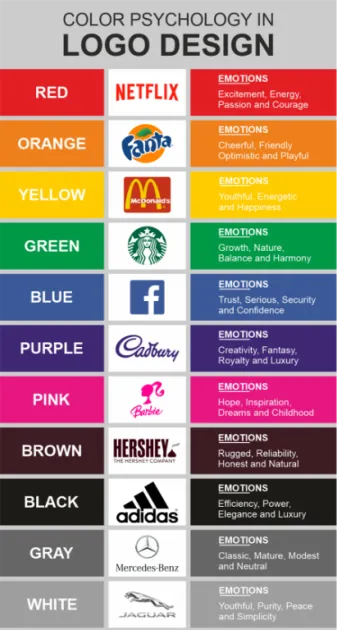
Color is the first thing the brain perceives. Each color carries a specific message:
- Blue (Trust & Stability): It’s no coincidence that tech giants like Intel, Facebook, and Dell choose this color. It is associated with professionalism and reliability.
- Red (Energy & Excitement): It increases the heart rate and demands attention. Ideal for the food industry or dynamic, high-energy brands.
- Yellow (Optimism & Warmth): Associated with happiness, clarity, and accessibility.
- Black (Luxury & Power): Used by premium brands to emphasize elegance, exclusivity, and authority.
Shape Geometry: Decoding Visual Messages
The structure of your logo dictates your brand's psychological footprint:
- Circles & Ovals: Embody Unity and Continuity. They create a welcoming, organic feel that fosters a sense of community.
- Squares & Triangles: Represent Stability and Precision. Sharp edges and straight lines project a message of professional reliability and structural integrity.
- Vertical Elements: Signal Upward Momentum. Ideal for brands that want to showcase leadership and a future-oriented mindset.
- Horizontal Elements: Convey Serenity and Reliability. They anchor the brand, suggesting a calm and steady foundation.
Typography - The Character of the Font
The style of the text defines the brand's "voice":
- Serif (Fonts with decorative strokes): Traditional, solid, and reliable (e.g., Rolex, Prada).
- Sans Serif (Clean, straight lines): Modern, tech-oriented, and minimalist (e.g., Google, Airbnb).
- Script (Handwritten style): Creative, personal, and emotional (e.g., Coca-Cola).
Minimalism and "Negative Space"
Modern psychology suggests that the simpler the logo, the easier it is to remember. Utilizing Negative Space (empty space) adds intellectual depth to the design.
- Example: The arrow hidden between the letters in the FedEx logo subconsciously signals speed and forward movement.
Conclusion
Logo design is not just about aesthetics—it is a strategic business decision. Nova Soft’s designers leverage these psychological principles to ensure your brand is not only visually stunning but also unforgettable to your audience.